
Tag Archive for: retirement goals


Retiring early is a dream shared by many but achieved by few. It’s not just about breaking free from the 9-to-5 grind but also about having the freedom to pursue your passions, travel, spend time with loved ones, or simply relax on a beach. Imagine doing all this while you’re still young and vibrant, without the burden of a paycheck-to-paycheck existence. While it may seem like a pipe dream, retiring early is a realistic goal for those who are willing to put in the effort and discipline required to make it a reality. With the right strategies, mindset, and planning, you can join the ranks of those who have successfully retired early and start living the life you’ve always wanted.
Key Takeaways
- Retiring early requires a combination of strategic financial planning, disciplined saving, and smart investing to achieve financial independence and pursue your passions.
- Key strategies for early retirement include taking advantage of workplace-sponsored retirement programs, paying off high-interest debt, investing early and often, using a Health Savings Account, and establishing multiple forms of income.
- With the right guidance, such as from Horizons Wealth Management, you can create a personalized plan to reach your financial goals and achieve early retirement, allowing you to live the life you’ve always wanted.
What is Early Retirement?
Early retirement is a state of financial independence in which an individual stops working for a salary or wage before the traditional retirement age, which is typically around 65 years old. In this situation, one has sufficient wealth, income streams, and resources to support one’s living expenses without the need for a regular paycheck. Essentially, early retirement means having the financial freedom to pursue one’s passions and interests without worrying about a steady income.
Tips to Retire Early
By combining strategic financial planning, disciplined saving, and smart investing, you can set yourself on the path to retiring early and enjoying the freedom and flexibility that comes with it.
Take Advantage of Workplace-Sponsored Retirement Programs
Take advantage of workplace retirement savings accounts, such as 401(k), 403(b), or Thrift Savings Plan, which offer tax benefits and potential employer matching contributions to supercharge your savings. By contributing enough to maximize employer matching, you can earn free money that can significantly boost your retirement nest egg.
Don’t Withdraw from Retirement Accounts
Avoid the temptation to withdraw funds from your retirement accounts for non-essential expenses. This can lead to penalties, taxes, and a significant setback to your early retirement goals. Instead, treat your retirement accounts as sacred and let the power of compound interest work in your favor over time.
Pay Off Debt
Paying off high-interest debt, such as credit card balances, and avoiding new debt can free up a significant amount of money in your budget to invest in your retirement accounts, accelerating your progress toward financial independence. By eliminating debt and avoiding new debt, you can redirect your hard-earned money toward building a prosperous retirement future.
Invest Early and Often
Investing early and often can help your money grow exponentially over time, thanks to the power of compound interest, and can significantly boost your chances of achieving early retirement. By starting to invest as soon as possible and consistently adding to your investments, you can take advantage of the market’s potential for long-term growth and build a sizable nest egg.
Use an HSA
Utilizing a Health Savings Account (HSA) can be a valuable strategy for early retirees. It allows you to set aside pre-tax dollars for medical expenses, reducing your taxable income and lowering your tax liability. Additionally, HSA funds can be invested and grown over time, providing a source of tax-free money for healthcare expenses in retirement.
Establish Multiple Forms of Income
Creating multiple streams of income can provide a safety net and help you achieve early retirement by reducing your reliance on a single income source. Consider creating multiple income streams, such as:
- Dividend-paying stocks or index funds
- Real estate investments, including rental properties or real estate investment trusts (REITs)
- Online businesses or side hustles, such as blogging, coaching, or freelancing
- A small business or entrepreneurial venture
Bottom Line
Achieving early retirement requires a combination of strategic financial planning, disciplined saving, and smart investing. By following these principles, you can break free from work life and pursue your passions, travel, and spend time with loved ones. With the right guidance, you can create a prosperous retirement future and live the life you’ve always wanted. Horizons Wealth Management can help you develop a personalized plan to reach your retirement financial goals and achieve early retirement.
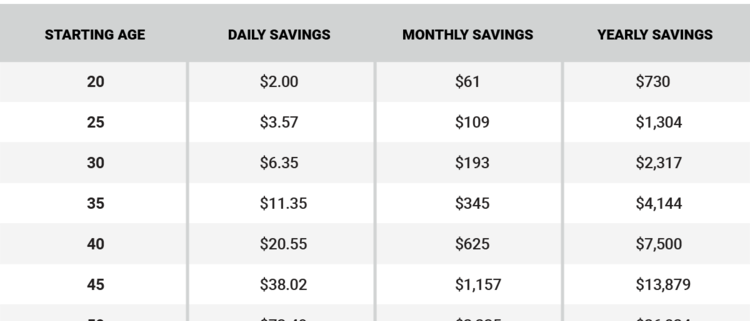
Becoming rich is nothing more than a matter of committing and sticking to a systematic savings and investment plan.
If you want to get rich, start investing- and start as early as you possibly can.
To illustrate the simplicity of building wealth over time, Bach created a chart detailing how much money you need to set aside each day, month, or year in order to have $1 million saved by the time you’re 65.
Next time you consider running to Starbucks for a $4 latte, think about this chart and consider redirecting that coffee cash to your savings. Check it out here.
CONNECT WITH US


Affiliations
